
If you have a wound on your leg that just won’t heal, it can feel frustrating and confusing.
You may be doing everything right, cleaning it, covering it, using the right dressings, but it still isn’t improving.
One of the most common reasons for this is ongoing swelling.
Your body cannot heal a wound well if the area is constantly swollen.
When your body heals a wound, it needs to:
For all of that to happen, your circulation has to be working properly.
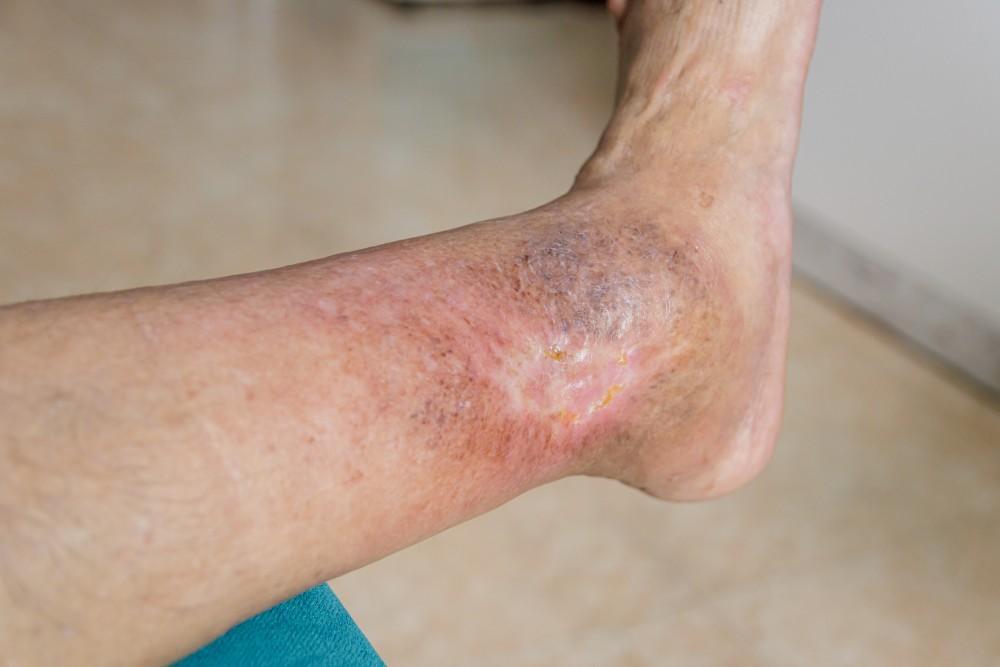
When your leg stays swollen, it changes how your body works in that area.
Swelling puts pressure on tiny blood vessels.
This makes it harder for oxygen to reach the wound. Without oxygen, healing slows down or stops.
The swelling is not just water.
Over time, it becomes thicker and contains proteins that do not drain well. This fluid sits in the tissue and keeps the area inflamed.
Your body has a system that clears extra fluid and waste.
When swelling is constant, that system gets overwhelmed. Waste builds up, and the wound is left in an unhealthy environment.
Swelling stretches the skin over time.
You may notice:
This makes wounds more likely to form and harder to heal.
Most wounds caused by poor vein function show up in a very specific area:
The veins in your legs have to push blood upward against gravity.
The lower inner leg handles a lot of that workload. When the veins are not working well:
This is why wounds often form there.
A venous ulcer is a wound that develops when the veins in your legs are not working properly.
Instead of blood moving back up toward your heart, it pools in the lower leg. This causes:
Over time, the skin breaks down and a wound forms.
At first, your body tries to manage the extra fluid.
But over time, the drainage system can get overwhelmed. When that happens:
Cleaning and dressing the wound is important.
But if the swelling is not treated, the wound is still sitting in a poor healing environment.
It is very difficult for your body to repair skin when there is constant pressure and fluid buildup.
To give your wound the best chance to heal, the swelling has to be managed.
This may include:
If your wound isn’t healing, it does not mean you are doing something wrong.
It often means your body needs help managing the swelling first. When the swelling improves, the wound finally has a chance to heal.
If swelling is present and your wound is not improving, it may be time to see a lymphedema therapist. You may need compression and specialized treatment to reduce the swelling and support healing.
Dr. Tiffany Topp, OTD, OTR/L, CLT
TOPP Lymphatics Therapy Services
“Reclaim your power. Realign with your mission.”
I understand that lymphedema and chronic swelling require ongoing management.
I have received education on:
I understand that managing my condition requires active participation, including following recommendations and reporting any changes in my condition.
I have had the opportunity to ask questions and feel comfortable with the information provided.