
Some people with lymphedema, chronic swelling, or venous insufficiency notice something alarming happening to their legs.
Fluid may begin to leak through the skin.
Patients often describe it as:
• clear fluid dripping from the skin
• socks or pant legs becoming wet
• fluid soaking through bandages
• small areas of skin that continuously “weep”
This condition is sometimes called Lymphorrhea (also known as weeping edema)
While it can be concerning to see, understanding why it happens can help you know what steps to take next.
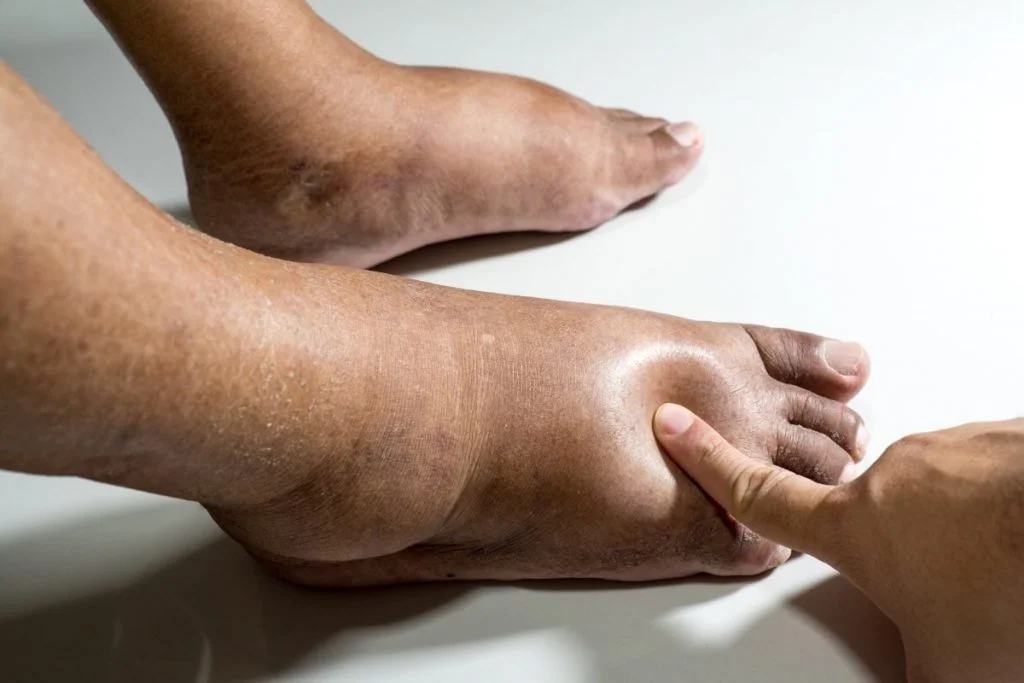
When swelling becomes severe, the tissues in the legs begin to hold more fluid than the skin can contain.
Normally, the body manages fluid through the circulatory system and the lymphatic system.
• The blood vessels deliver fluid to tissues.
• The lymphatic system removes excess fluid, proteins, and waste products.
When the lymphatic system becomes overwhelmed or damaged, fluid begins to accumulate in the tissues. Over time, the pressure inside the tissues increases.
Eventually, the fluid can begin to push outward through the skin, especially through tiny openings in the skin or small breaks in the surface.
This is why the skin may start to leak or “weep” fluid.
The fluid that leaks from the skin is called lymphatic fluid.
This fluid is not just water.
It contains:
• proteins
• inflammatory substances
• immune cells
• waste products
Because of this, the fluid can be very irritating to the skin. When lymphatic fluid sits on the skin, it can cause:
• skin breakdown
• redness and irritation
• softening and weakening of the skin
• increased risk of infection
If the skin remains wet for long periods of time, it can also make it easier for bacteria to enter the skin. This increases the risk of cellulitis, a serious skin infection that people with lymphedema are already more vulnerable to.
When swelling is present for months or years, the tissues can begin to change.
The skin may become:
• stretched
• fragile
• thickened
• less able to hold back fluid
As pressure continues to build under the skin, fluid may eventually find a way to escape through the surface. This is why weeping legs are usually a sign that swelling has become severe and needs medical attention.
The most effective treatment for this condition is Complete Decongestive Therapy (CDT) provided by a certified lymphedema therapist.
CDT includes four important components:
• compression therapy
• manual lymphatic drainage
• exercise
• skin care
Compression is especially important because it helps push fluid out of the tissues and back into circulation, where the body can remove it.
When the pressure inside the tissues decreases, the skin is better able to heal and stop leaking fluid.
Many patients notice that once proper compression is started, the leaking begins to improve.
If your legs are leaking fluid, it is important not to ignore it. The leaking fluid can damage the skin and increase the risk of infection if it is not managed properly.
A certified lymphedema therapist can help:
• reduce the swelling safely
• protect the skin
• apply proper compression bandaging
• teach you how to manage the condition at home
Early treatment can help prevent complications and improve long-term outcomes.
The Bottom Line
If your legs are leaking fluid, it is often a sign of severe swelling or lymphatic overload.
The fluid that leaks from the skin contains proteins and inflammatory substances that can irritate the skin and increase the risk of infection.
With proper treatment, including compression and Complete Decongestive Therapy, many people are able to reduce swelling and protect their skin.
If you are experiencing this symptom, it is important to seek guidance from a certified lymphedema therapist or healthcare provider.
I understand that lymphedema and chronic swelling require ongoing management.
I have received education on:
I understand that managing my condition requires active participation, including following recommendations and reporting any changes in my condition.
I have had the opportunity to ask questions and feel comfortable with the information provided.